 Logan Peterson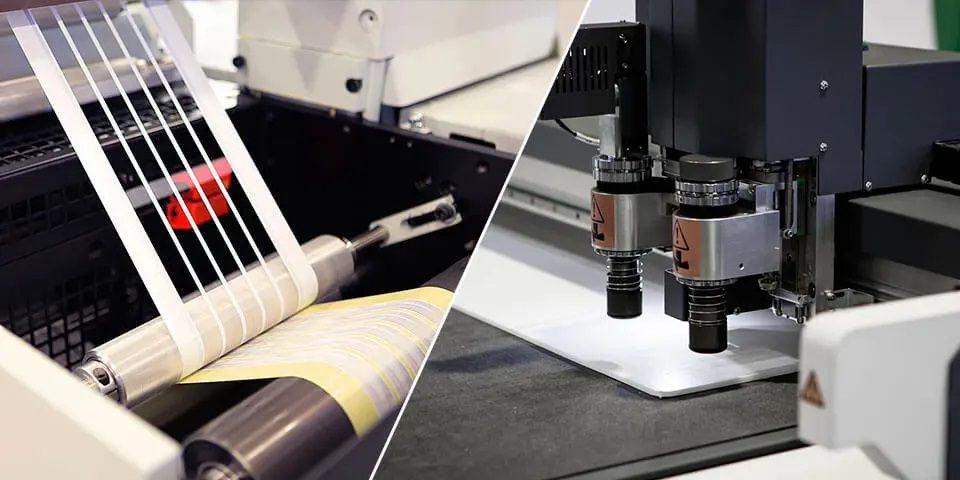
Manufacturing processes often come down to choosing the right method for the material, volume, and level of detail required. Flat bed systems remain one of the most widely used approaches for producing durable, consistent parts, especially when projects involve thicker or more rigid materials. Within this space, flat bed die cutting services provide a dependable way to convert raw sheets into precise, usable components without sacrificing structural integrity.
The process uses a press-style system where a shaped die is forced through material laid on a flat surface. That direct, controlled pressure allows for clean cuts through dense substrates that might not perform as well in more continuous cutting methods. It’s a straightforward approach, but one that offers strong control over accuracy and repeatability.
Why Flat Bed Systems Still Matter
Even with the rise of high-speed rotary systems, flat bed die cutting continues to hold a strong place in production environments. The main reason is versatility. It handles a wide range of materials, including dense rubber, foam, fiber composites, and specialty laminates, without requiring major changes to setup or process.
Another advantage is precision in smaller or more complex production runs. Because each press cycle is individually controlled, operators can fine-tune pressure and alignment to match specific material behavior. That level of control is especially useful when working with materials that require deeper penetration or more force to achieve a clean edge.
Flat bed die cutting services are often selected when durability matters as much as volume. In many cases, the components produced through this method are used in applications where performance under stress is critical, such as sealing, insulation, or vibration control systems.
Material Behavior and Cutting Consistency
Different materials respond differently under compression, and flat bed systems are well suited to managing that variability. Thicker materials often require greater force to achieve a complete cut, while layered or composite materials may require careful calibration to avoid delamination or distortion.
Consistency comes from maintaining even pressure across the entire cutting surface. When pressure is uneven, edges can become irregular or incomplete. To prevent that, tooling alignment and press calibration are regularly checked to ensure uniform contact throughout each cycle.
Pepin Manufacturing integrates these principles into its production approach by focusing on stable setups and repeatable processes. That attention to consistency helps ensure that finished parts perform reliably once they move into assembly or end-use environments.
Flexibility Across Production Volumes
Flat bed systems are particularly effective in situations where production needs vary. They can handle both low-volume custom runs and larger production batches without requiring a completely different setup. This flexibility makes them useful for industries where demand fluctuates or where product designs evolve frequently.
Flat bed die cutting services also allow for quick tooling changes compared to more complex systems. That adaptability supports faster transitions between projects, which can be important when working under tight timelines or managing multiple product lines.
While the process may not match the continuous speed of rotary systems, it compensates with adaptability and strength. For many manufacturers, that balance is more important than maximum throughput.
Quality Control and Process Stability
Quality in flat bed die cutting depends heavily on setup precision and ongoing maintenance. Each component of the system, from the die itself to the press bed, plays a role in ensuring accurate results. Small deviations in alignment or pressure can lead to inconsistencies, especially when working with dense or layered materials.
To maintain stability, production teams typically monitor wear on cutting dies and verify alignment at regular intervals. This helps reduce variation between production cycles and ensures that each part meets design expectations.
Pepin Manufacturing emphasizes this kind of controlled consistency as part of its broader production approach. By maintaining stable operating conditions, it becomes easier to produce parts that meet both functional and dimensional requirements without unnecessary rework.
Practical Role in Modern Production Systems
Flat bed die cutting continues to serve as a reliable foundation in manufacturing environments where strength, precision, and material flexibility matter. It is not always the fastest method, but it is often one of the most dependable when dealing with complex or heavy-duty materials.
Its ability to handle a wide range of substrates while maintaining dimensional accuracy makes it a steady choice for industries that require durability and repeatability. From protective components to industrial-grade seals, the applications remain broad and consistently relevant.
Within this landscape, flat bed die cutting services provide manufacturers with a controlled and adaptable solution. When integrated into a well-structured production system, they support long-term stability and consistent output, helping ensure that each component performs as intended from initial cut to final use.